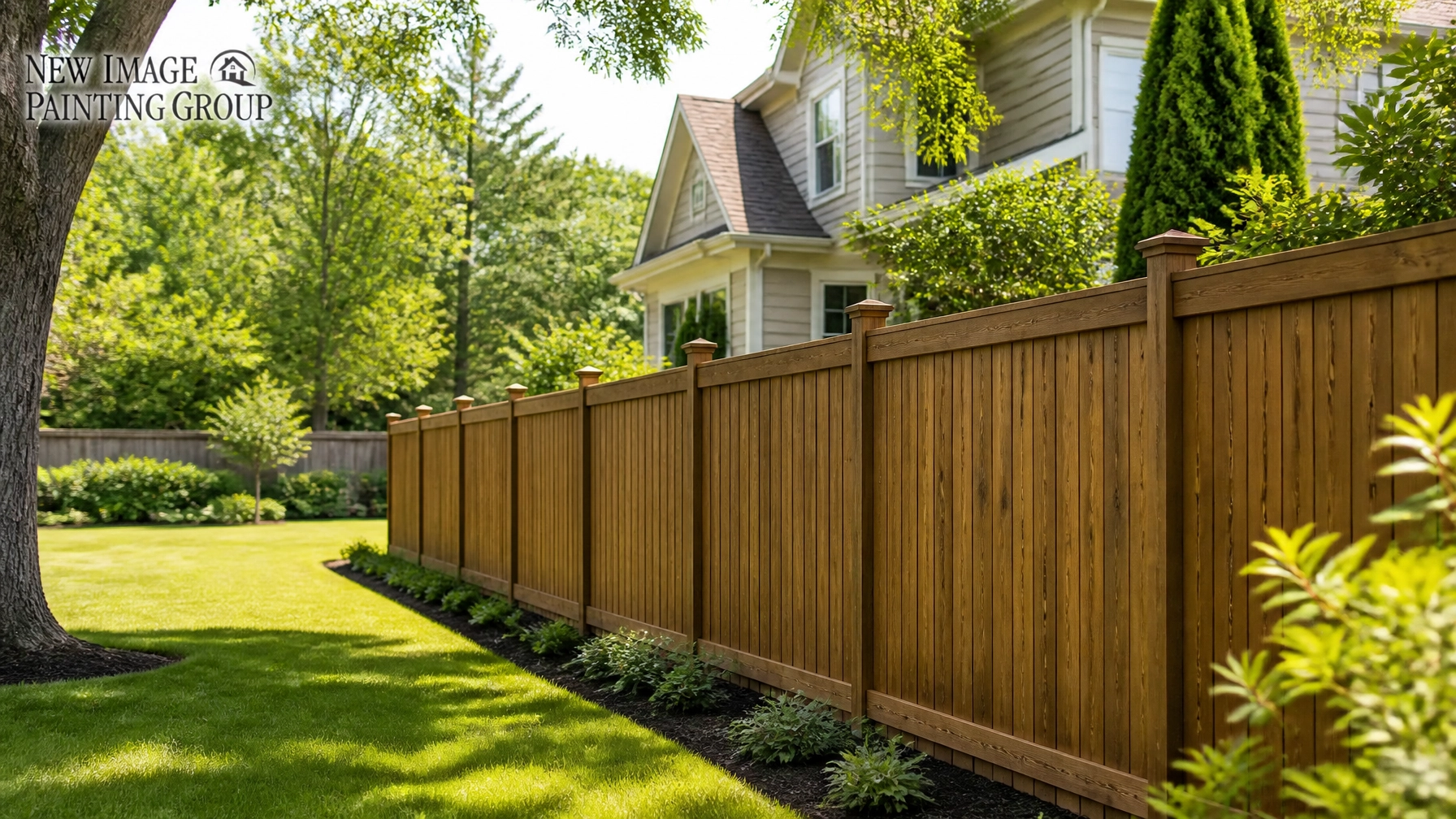
Metro Atlanta winters may not bring months of snow, but they do bring cold snaps, rain, damp leaves, and quick temperature swings. Those conditions can be hard on unprotected decks, fences, railings, and wood siding. Water gets into exposed wood, then expands as temperatures drop. Repeated wetting and drying can contribute to cracking, peeling stain, loose boards, and rot.
The smart move in late fall is to inspect, clear debris, and address vulnerable spots before winter weather sets in. Use this checklist to decide what you can do now, what needs repair, and whether there’s still a safe weather window for staining.
1. Check for failing stain and moisture damage
Walk the deck and fence in daylight. Look closely at horizontal surfaces, board ends, railing connections, lower fence boards, and areas near the house where water may collect. Inspect wood siding and trim as well, especially around joints and places where gutters or downspouts release water.
Watch for:
- Stain that is peeling, flaking, or wearing away unevenly
- Gray, darkened, or persistently damp-looking patches
- Soft or spongy spots, particularly around posts and board ends
- Splits, raised grain, cupping, or boards that move underfoot
- Loose rails, popped fasteners, or a gate that sags or sticks
A simple water-drop check can give you a first clue about the existing finish. Sprinkle a little water on a few clean, dry areas. If it beads and sits on the surface, the finish may still be repelling water, or the wood may not be ready for a fresh coat. If the water quickly darkens and absorbs into bare-looking wood, the surface may need protection. This is a quick screening check, not a substitute for checking the product label or measuring wood moisture.

2. Clear leaves and help wood dry
Wet leaves and pine needles trap moisture against deck boards and can block drainage gaps. Clear them from the deck, stairs, corners, and the area where the deck meets the house. Sweep away debris regularly through winter, especially after storms.
Then look at what may keep the wood wet:
- Move planters, mats, and stored items so air can circulate underneath.
- Check whether water ponds on the deck or drains toward the house.
- Keep shrubs and vines from pressing against fences and siding.
- Check that gutters and downspouts are clear and direct water away from wood.
- Remove debris around fence posts where soil and leaves stay damp.
The National Weather Service’s Georgia climate summaries reflect the state’s wet climate and seasonal variation. The practical takeaway for wood surfaces is straightforward: limit the time water and organic debris remain in contact with the finish.

3. Repair damaged wood before sealing or staining
Stain can help protect sound wood, but it cannot restore rotten boards or make a weak railing safe. Before applying a coating, deal with the underlying damage. Probe suspicious areas gently with a screwdriver; wood that gives way easily, crumbles, or feels soft needs closer attention. Check the ends of deck boards, stair treads, posts near the ground, railing joints, and the house-side deck connection.
Depending on what you find, repairs may include:
- Replacing split, badly cupped, or rotten boards
- Securing loose deck boards, stairs, or fence pickets
- Repairing or replacing compromised railing components
- Addressing recurring water entry near siding, trim, or deck connections
- Correcting drainage issues that keep wood wet
If you find extensive rot, an unstable rail, or damage near the deck’s connection to the house, don’t treat it as a cosmetic issue. A qualified professional can determine the scope of repair and help ensure damaged wood is addressed rather than covered. New Image Painting Group provides wood rot replacement and siding repair as part of its exterior services.

4. Decide whether staining is viable this winter
A warm afternoon does not automatically make a good staining day. The wood needs to be dry, the air and surface temperatures must meet the product’s requirements, and the finish needs enough time to dry before rain, heavy dew, frost, or a freeze.
Before planning a winter application:
- Read the product label and technical data sheet. Temperature limits and rain-free drying times differ by product. For example, DEFY’s label guidance calls for specific temperature and rain conditions. Those requirements are product-specific; don’t assume another stain has the same limits.
- Check the wood, not just the forecast. A moisture meter can help you test several spots, including shaded areas, board ends, and lower fence boards. Follow the stain manufacturer’s moisture limit.
- Allow enough dry time. Consider the full forecast, including overnight temperatures, rain, frost, and heavy dew, not just the hours immediately after application.
- Wait if conditions are marginal. Cold, damp weather can slow drying and interfere with a durable, even finish.
In Georgia, staining can still be possible during a suitable winter weather window. But if the surface is damp, temperatures are likely to fall below the product’s minimum, or rain is expected before the finish has dried, postpone the work. A reliable spring or fall window is preferable to rushing an application under uncertain conditions.
For professional help with preparation and timing, explore New Image Painting Group’s deck and fence staining and restoration service. If you’re searching for fence staining Marietta GA, ask about surface condition, repairs, product requirements, and the weather window, not just the stain color.
5. Use this quick pre-freeze checklist
Before the next cold snap, make time to:
- Sweep leaves and pine needles from decks and stairs.
- Inspect boards, railings, fence posts, and wood siding for softness or splitting.
- Tighten loose fasteners and flag repairs that need a professional.
- Check that water drains away from wood and the house.
- Move items that hold moisture against deck boards.
- Avoid coating damaged, dirty, or damp wood.
- Confirm temperature and drying requirements before scheduling stain work.
These small checks can help you spot problems early and reduce the amount of time wood stays wet. If the finish is still sound and the boards are stable, winter may only call for routine cleanup and monitoring. If you see peeling, recurring dampness, or soft wood, address the cause before applying a new coating.
Protect your outdoor wood with a plan
Homeowners in Marietta, Cobb, Bartow, Fulton, and Paulding Counties can use this checklist to prepare for winter without guessing at the weather or painting over a problem. New Image Painting Group takes a preparation-first approach to repairs and exterior finishes, with premium materials, proven techniques, and attention to detail. Our work is backed by more than 600 five-star reviews.
Ready to assess your deck, fence, siding, or railings? Contact New Image Painting Group to discuss your project and plan the right next step.