A kitchen transformation does not always require new cabinets, demolition, or weeks of construction. If your existing cabinets are structurally sound, professional cabinet painting can deliver a dramatic new look while reducing the cost, mess, and disruption of a full remodel.
For homeowners in Marietta, Cobb County, Fulton County, Bartow County, and Paulding County, refinishing the cabinets is one of the most effective ways to refresh an outdated kitchen. The right color, a durable finish, and meticulous preparation can transform the room while preserving the layout and storage you already use every day.
New Image Painting Group brings a customer-first approach to every interior painting project. With more than 600 five-star reviews, premium materials, and proven techniques, our team treats your home like our own: from the first consultation through the final inspection.
Why Paint Kitchen Cabinets Instead of Replacing Them?
Cabinet replacement may be necessary in some kitchens. But when the boxes, doors, and drawer fronts are in good condition, painting can create a high-impact update without changing the kitchen’s footprint.
Professional cabinet painting can:
- Modernize dated wood tones or worn finishes
- Brighten a dark kitchen with lighter colors
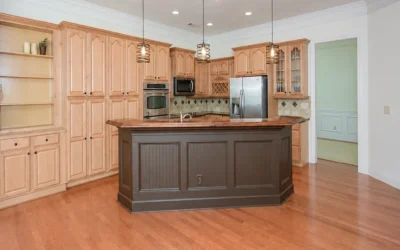
- Add contrast with a painted island
- Improve the appearance of scuffs, stains, and uneven color
- Coordinate cabinets with new flooring, countertops, or backsplash tile
- Reduce the disruption associated with a full kitchen remodel
- Help extend the useful life of existing cabinetry
Painting does not change the cabinet layout, hardware placement, storage capacity, or countertop configuration. That makes it a focused improvement rather than a complete renovation: and often a practical investment for homeowners who want a significant visual change without rebuilding the room.
Step One: Assess the Condition of Your Cabinets
The best candidates for painting are cabinets that are structurally stable. Before selecting a color, inspect the entire system, including the doors, drawer fronts, face frames, and cabinet boxes.
A professional assessment should look for:
- Solid or stable cabinet doors and frames
- Loose hinges or drawer hardware
- Cracks, dents, gouges, and deep scratches
- Water damage near the sink or dishwasher
- Peeling veneer or separating laminate
- Swollen particleboard or MDF
- Grease buildup and heavily worn areas
- Previous paint or finish that is failing
Minor dents, holes, and surface imperfections can often be repaired before painting. Loose hardware can be adjusted or replaced. However, severe swelling, extensive water damage, delamination, or failing cabinet construction may indicate that replacement is the better long-term choice.
A reputable painting contractor should explain what painting can improve: and what it cannot. The goal is not to disguise serious damage. The goal is to create a durable, attractive finish on a sound surface.
Choose the Right Color and Sheen
Cabinet color influences the entire kitchen. Light neutrals such as warm white, cream, soft gray, and greige can make a room feel brighter and more open. Deep blue, charcoal, and muted green can create a dramatic focal point, especially on an island.
Consider these factors before making a final selection:
- Natural and artificial lighting
- Countertop and backsplash colors
- Flooring and nearby wall colors
- The visual size of the kitchen
- Whether you want a timeless or trend-forward look
- How the color will coordinate with appliances and hardware
Always test samples in the actual kitchen. A color can look different in morning light, afternoon sun, and evening lighting.
For sheen, satin and semi-gloss are common choices for kitchen cabinetry because they balance cleanability and appearance. Higher sheens can make surfaces easier to wipe down, but they may also highlight dents, scratches, and uneven repairs. A professional can help match the sheen to the cabinet condition and the level of daily use.
Preparation Determines the Final Result
Cabinet painting is not a simple matter of applying paint over an existing finish. Preparation is the foundation of adhesion, smoothness, and long-term durability.
A professional process typically includes:
-
Removing doors, drawers, and hardware
Each door and drawer should be labeled and removed carefully so components can be reinstalled correctly. -
Cleaning and degreasing
Kitchens collect cooking oils, grease, dust, and cleaning-product residue. These contaminants can prevent primer from bonding. Cabinets must be thoroughly cleaned and allowed to dry. -
Sanding or deglossing
Glossy finishes need to be dulled so the primer can grip the surface. Sanding also smooths minor imperfections. The correct approach depends on the existing coating and cabinet material. -
Repairs
Dents, holes, damaged edges, and loose joints should be addressed before priming. Painting over damage does not make it disappear. -
Dust removal and protection
Surfaces must be free of sanding dust. Countertops, floors, appliances, and adjacent walls should be carefully protected.
This preparation takes time, but it is what separates a durable cabinet finish from one that chips, peels, or looks uneven soon after completion.

Primer Creates the Bonding Foundation
Primer is especially important when painting over stained wood, glossy coatings, laminate, or cabinets with repaired areas. The correct primer helps create a consistent surface and improves the bond between the existing material and the finish coats.
Primer selection should account for:
- The cabinet material
- The existing finish
- Stains or discoloration
- The selected paint color
- Kitchen moisture and daily wear
After the primer dries, the surface may be lightly sanded again to remove raised texture and create a smooth base. Thin, even coats are generally preferable to heavy application, which can lead to runs, buildup, and sticking around cabinet edges.
Spray Versus Brush and Roller Application
Both spraying and brush-and-roller application can produce quality results when performed correctly. The best method depends on the project, cabinet design, work area, and finish requirements.
Spraying
Spraying can provide a smooth, uniform finish with minimal brush or roller texture. It is often well suited to detached doors, drawer fronts, and large flat components.
Spraying requires:
- Thorough masking and containment
- Proper ventilation
- Controlled application technique
- Careful handling of doors while wet
- A clean, dust-controlled drying area
Brush and roller application
A professional may use a fine brush for edges, profiles, and detailed areas, combined with a high-quality microfiber roller for flat surfaces. This approach can be effective when the work area does not support spraying or when specific cabinet details require controlled hand application.
The finish should be applied in multiple thin coats. Rushing the process or applying excessive paint can create drips, uneven sheen, and doors that stick after reinstallation.
Allow for Drying and Curing
Drying and curing are not the same. A cabinet may feel dry to the touch while the coating is still developing its final hardness.
In a typical controlled indoor environment:
- Recoat times should follow the coating manufacturer’s instructions.
- Cabinet components often need at least 24 hours of drying before careful handling.
- Two or three days may be preferable before doors and drawers are reinstalled.
- Heavy cleaning and aggressive use should be avoided during the early cure period.
- Full hardness can take several weeks, depending on the coating, temperature, airflow, and humidity.
Georgia’s humidity makes environmental control particularly important. In Marietta and throughout Metro Atlanta, HVAC and dehumidification can help maintain more stable conditions during the project. Excess moisture can slow drying, increase tackiness, and make freshly painted surfaces more vulnerable to damage.
Your painter should provide clear instructions for light use, normal use, cleaning, and hardware installation. Product-specific directions should always take priority; resources such as Benjamin Moore’s kitchen cabinet painting guide also emphasize careful preparation, priming, multiple coats, and adequate drying time.
How to Maintain Painted Cabinets
Once the finish has fully cured, maintenance is straightforward.
- Wipe spills and grease promptly.
- Use a soft cloth and mild, non-abrasive cleaner.
- Avoid scouring pads and harsh chemicals.
- Do not hang consistently damp towels on cabinet doors.
- Use the range hood or ventilation fan while cooking.
- Check hinges and hardware periodically.
- Avoid slamming doors and drawers.
- Keep indoor humidity at a reasonable, consistent level.
Good ventilation and gentle cleaning help protect the finish from moisture, grease, and everyday abrasion.

When Cabinet Replacement May Be Better
Cabinet painting is not the right solution for every kitchen. Replacement may be more appropriate when:
- Cabinet boxes are severely swollen or water-damaged
- Doors and frames are structurally failing
- Veneer is extensively peeling
- The layout no longer works for your household
- You need additional storage or different cabinet dimensions
- Repairs would cost nearly as much as new cabinetry
- You want to change the countertop, plumbing, electrical, or kitchen footprint
A professional consultation can help you compare the condition of your existing cabinets with your renovation goals. Painting is most valuable when it solves the appearance problem without ignoring a structural one.
A Full-Service Partner for Your Home
New Image Painting Group specializes in high-quality interior and exterior improvements for homeowners and businesses across Metro Atlanta. Cabinet painting can also be coordinated with other work when your property needs a broader refresh, including:
- Interior painting
- Drywall repair
- Pressure washing
- Siding repair
- Gutter installation
- Wood rot replacement
- Deck and fence staining and restoration
- Window services
- Responsible paint disposal
Our team manages the details, protects your property, works around your schedule, and communicates clearly throughout the project. That customer-first approach has helped New Image Painting Group earn more than 600 five-star reviews.
Transform Your Kitchen Without a Full Remodel
If your cabinets are structurally sound but visually outdated, professional cabinet painting may be the most efficient path to a remarkable kitchen transformation. With careful assessment, thorough preparation, premium materials, controlled application, and realistic curing expectations, your existing cabinetry can be refreshed, enhanced, and protected for years of everyday use.
For a professional cabinet painting consultation in Marietta, Cobb County, Fulton County, Bartow County, or Paulding County, call 678-444-4901 or visit www.newimagepaintinggroup.com. Request a free quote and discover what a precise, durable finish can do for your kitchen.